
Search

How Well Do Center Console Boats Handle Rough Waters?

Center Console Boats Handling Rough Water

Summary

Hull design, size, and construction all determine how center console boats for sale handle chop. Deep-V hulls and larger boats generally ride flattest offshore, while smaller and modified-V models feel wave impact more directly. This guide compares hull types, walks through what to check on a used boat, and covers the setup and maintenance habits that keep any center console rough-water ready.

Introduction

If you’re shopping for center console boats for sale one of the first questions to ask is how the hull performs when conditions turn choppy. Rough water separates a good boat from a great one, and the right design makes all the difference in comfort, control, and safety. Our sales team at the Naples and Port Charlotte locations fields this question daily from anglers comparing hulls before a purchase — here’s what actually holds up once you’re twenty miles offshore.

What Makes Center Console Boats Different in Rough Water

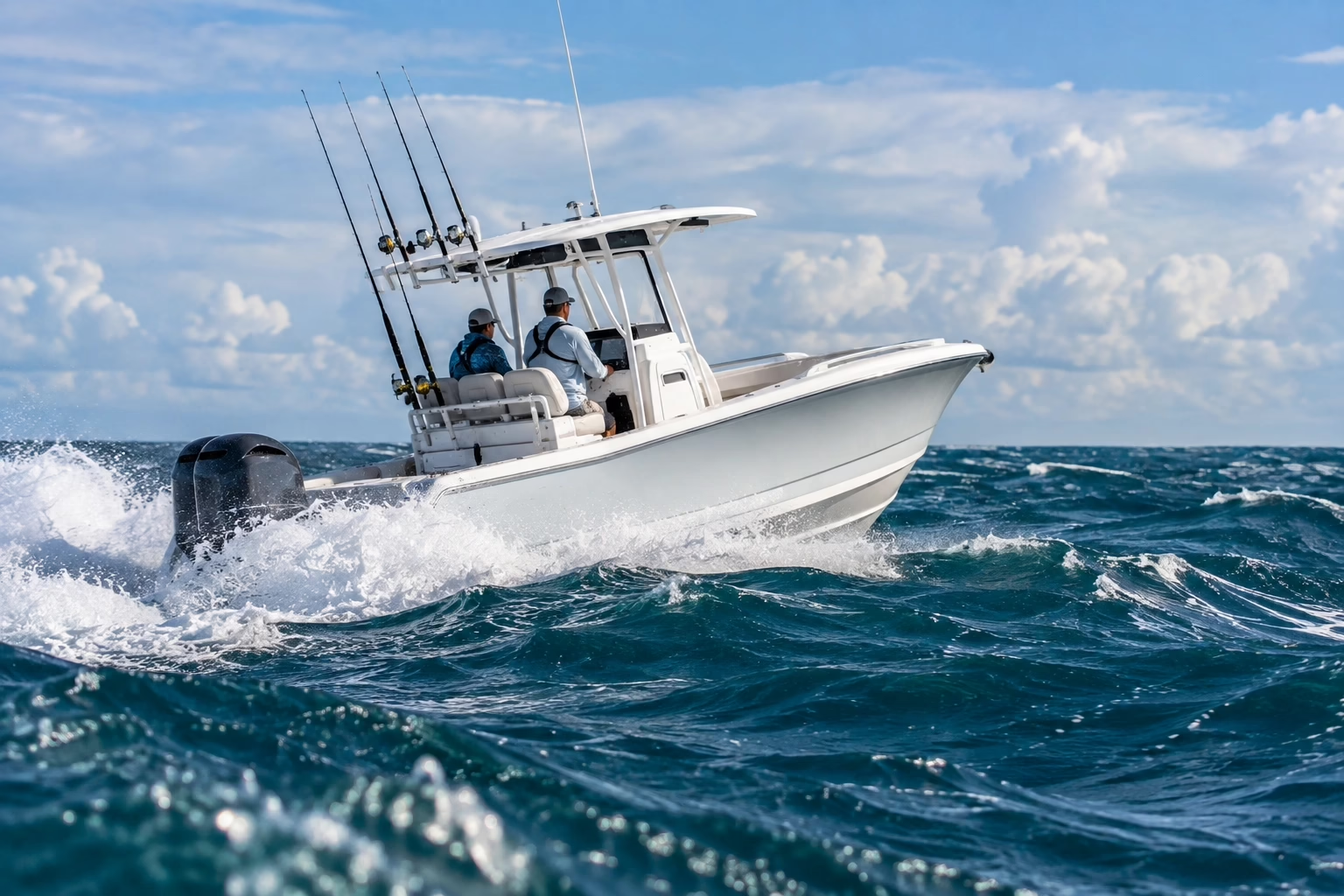
Center console boats place the helm in the middle of the deck, giving 360-degree visibility and balanced weight distribution. That layout, combined with hull design, plays a major role in how center console fishing boats handle waves, chop, and wind-driven swells offshore.

Hull Design and Rough-Water Performance

Deep-V vs Modified-V Hulls

A deep-V hull slices through waves more efficiently, offering a smoother ride offshore, while a modified-V hull balances stability at rest with reasonable performance underway. Boaters who frequently run offshore in rough conditions generally prefer a deeper V for its wave-cutting ability.

Aluminum Center Console Boats vs Fiberglass

Aluminum center console boats tend to be lighter and more responsive in chop, with excellent durability against impacts. Fiberglass models, on the other hand, often provide a softer, quieter ride in bigger swells thanks to their weight and hull flex characteristics. Both are capable choices, and the right one depends on your typical boating conditions.

Expert Insight: Our techs consistently hear the same feedback from offshore anglers: deep-V fiberglass hulls feel more planted in a 3-4 foot chop, while aluminum deep-Vs hold up better against the dings and impacts of skinny-water and reef running.

Small vs Larger Center Consoles in Choppy Conditions

Small center console boats are nimble and easy to trailer, but shorter hulls tend to feel rough-water chop more directly. Larger center consoles ride flatter through waves and offer more freeboard, which keeps spray down and passengers more comfortable during extended offshore runs.

Choosing Between New, Used, and Luxury Center Consoles

Luxury Center Console Boats

Luxury center console boats often include upgraded hull engineering, additional deadrise, and premium suspension seating, all of which improve rough-water comfort for serious offshore anglers and cruisers.

Affordable Center Console Boats

Affordable center console boats can still handle moderate chop well, especially when paired with proper trim and speed management. You don’t need the highest price tag to boat safely and comfortably in typical Gulf Coast conditions.

Finding Used Center Console Boats for Sale Near You

Searching for used center console boats for sale near me is a smart way to get proven hull designs at a lower cost. Just be sure to inspect the transom, stringers, and hull for stress cracks, since these areas take the brunt of rough-water impact over time.

Center Console Hull Types at a Glance

Type

Rough-Water Comfort

Best For

Deep-V Hull

Excellent — cuts through chop

Offshore fishing and cruising

Modified-V Hull

Good — balances stability and ride

Mixed inshore/nearshore use

Aluminum

Good — light and durable

Skinny water, reef, impact-prone areas

Fiberglass

Very Good — smoother in swells

Bigger offshore water, comfort-focused

Small (under 20 ft)

Fair — feels chop directly

Bays, inlets, calmer days

Larger (25 ft+)

Excellent — flatter ride

Extended offshore runs, families


Tips for Handling Rough Water Safely

Reducing speed, adjusting trim to keep the bow from digging in, and approaching waves at a slight angle all improve ride quality and control. Distributing weight evenly across the boat also helps maintain stability when conditions pick up unexpectedly.

Maintenance That Keeps Center Consoles Rough-Water Ready

Regularly inspecting hull fittings, checking for water intrusion in the transom, and keeping the bilge pump in good working order all matter more once you’re running in rough conditions offshore. A boat that’s mechanically sound handles chop far better than one with deferred maintenance. For a deeper dive into matching a hull to your boating style, see our complete center console boats buyer’s guide.

How Engine Setup Affects Rough-Water Handling

Beyond hull design, the way your outboard is mounted and trimmed plays a real role in how a center console performs in waves. An engine trimmed too high can cause the propeller to ventilate in chop, leading to a loss of control right when you need it most. Keeping the motor properly trimmed for conditions, and ensuring the mounting height suits your hull, helps maintain consistent bite and steering response even as water gets rougher.

Passenger Comfort and Safety Considerations

Rough water isn’t just a handling question, it’s also a comfort and safety one. Bolster seating, secure grab rails, and non-skid deck surfaces all make a meaningful difference when a center console is working through chop. Before heading offshore in questionable conditions, confirm that safety gear, bilge pumps, and communication equipment are all in working order, since rough water is exactly when you’re most likely to need them.

Why Southwest Florida Boaters Trust Local Expertise

From Gulf Coast chop off Fort Myers to open water runs near Naples, local conditions vary throughout the season. Marine Trading Post has helped Southwest Florida boaters select and maintain center consoles, from small center console boats to luxury builds, since 1985, with the parts and knowledge to keep any hull performing at its best.

Conclusion

Center console boats, when properly matched to their hull design, size, and construction, handle rough water impressively well, whether you’re running a compact aluminum model or a luxury fiberglass build. The key is understanding how deadrise, length, and material affect performance, then choosing a boat suited to the conditions you’ll actually face. Marine Trading Post has spent three generations helping boaters throughout Fort Myers, Port Charlotte, and Naples find the right center console and the parts to keep it running safely in any water condition.

Frequently Asked Questions

Yes, particularly deep-V models, which are specifically designed to cut through waves and maintain control in choppy or swelling conditions.

Aluminum boats are lighter and responsive, while fiberglass often provides a smoother, quieter ride in larger swells. Both perform well when matched to appropriate conditions.
Small center consoles can handle moderate chop but feel wave impact more directly than larger models, so it’s wise to stay within recommended conditions for the boat’s size.
Inspect the hull, transom, and stringers for cracks or soft spots, and confirm the boat’s history of use in offshore versus calm-water conditions.
Luxury models often include enhanced hull engineering and features that improve comfort, but a well-maintained, affordable center console can still perform safely in moderate rough water.