How to Find the Right Suzuki Outboard Parts Using Your Engine Model
Ordering the wrong outboard part costs you time, money, and a return shipping hassle you’d rather avoid. As a trusted Suzuki original outboard parts supplier serving Fort Myers, Port Charlotte, and Naples since 1985, Marine Trading Post walks you through exactly how to identify your engine and find the correct replacement part the first time.
Suzuki updates internal components throughout a model’s production run, so two engines with the same model number can require different parts depending on serial number range. Ordering Suzuki outboard OEM parts that match your exact engine avoids fitment issues, prevents damage from incompatible components, and keeps your warranty intact.
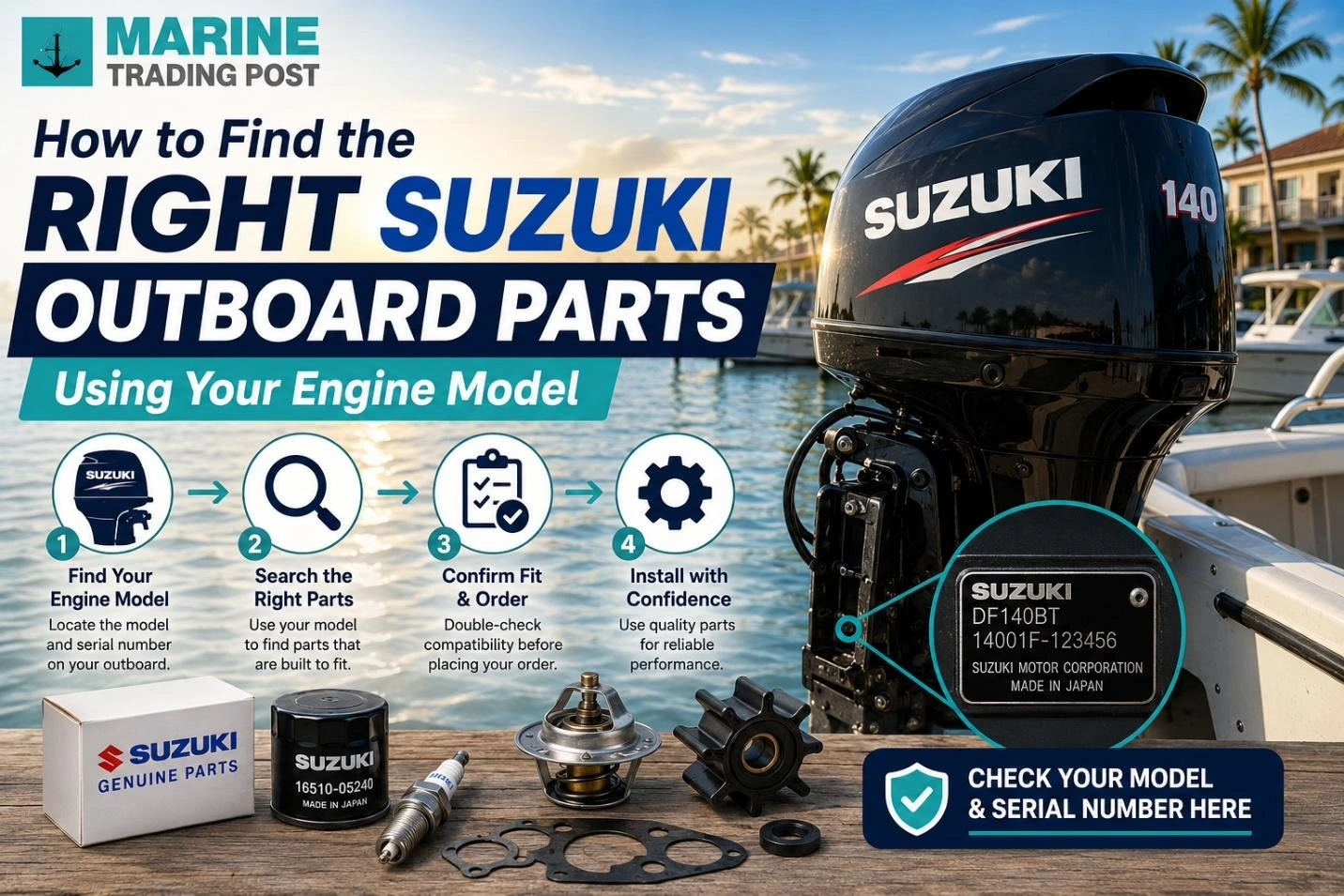
The primary ID plate is almost always located on the starboard side of the transom bracket, the metal assembly that clamps the motor to your boat. If that tag is worn or missing, check the engine block itself after removing the top cowling; many Suzuki outboards have a secondary metal disc near the starter or freeze plug with the same information stamped in.
Suzuki outboard engine parts are organized around a model code that reveals key specifications. The letters ‘DF’ indicate a four-stroke engine, followed by the horsepower rating. A letter after the horsepower often denotes shaft length: S for a 15-inch shaft, L for 20 inches, X for 25 inches, and XX for 30 inches, used on the largest offshore boats. An additional letter may indicate the generation or version of that engine.
Record the full model number and serial number from your ID plate before you start shopping.
Search Suzuki’s official parts catalog or your supplier’s lookup tool using your model number to view an exploded parts diagram.
Cross-check the part number against your serial number range, since running changes can affect fitment even within the same model.
OEM parts are built to Suzuki’s exact tolerances and are the safest choice for engine internals, fuel system components, and electrical parts. Quality aftermarket alternatives can be a cost-effective option for items like filters, anodes, or cosmetic covers, but always confirm the manufacturer’s reputation before buying Suzuki marine engine spare parts from an unfamiliar source.
Marine Trading Post’s online catalog lets you buy Suzuki outboard parts online by searching your model number directly, with both genuine OEM and trusted aftermarket options available. Local boaters can also pick up parts in person at our Fort Myers, Port Charlotte, or Naples locations.
An authorized dealer has direct access to Suzuki’s parts catalog, current running-change information, and genuine components backed by manufacturer quality standards. This reduces the risk of receiving a mislabeled or counterfeit part, which is a growing concern with unverified online sellers.
The most common mistake is ordering by horsepower alone instead of the full model and serial number. Others skip verifying compatibility altogether or purchase from unauthorized sellers offering suspiciously low prices on critical components. Taking a few extra minutes to confirm your engine’s exact specifications saves far more time in the long run.