
Quick Summary
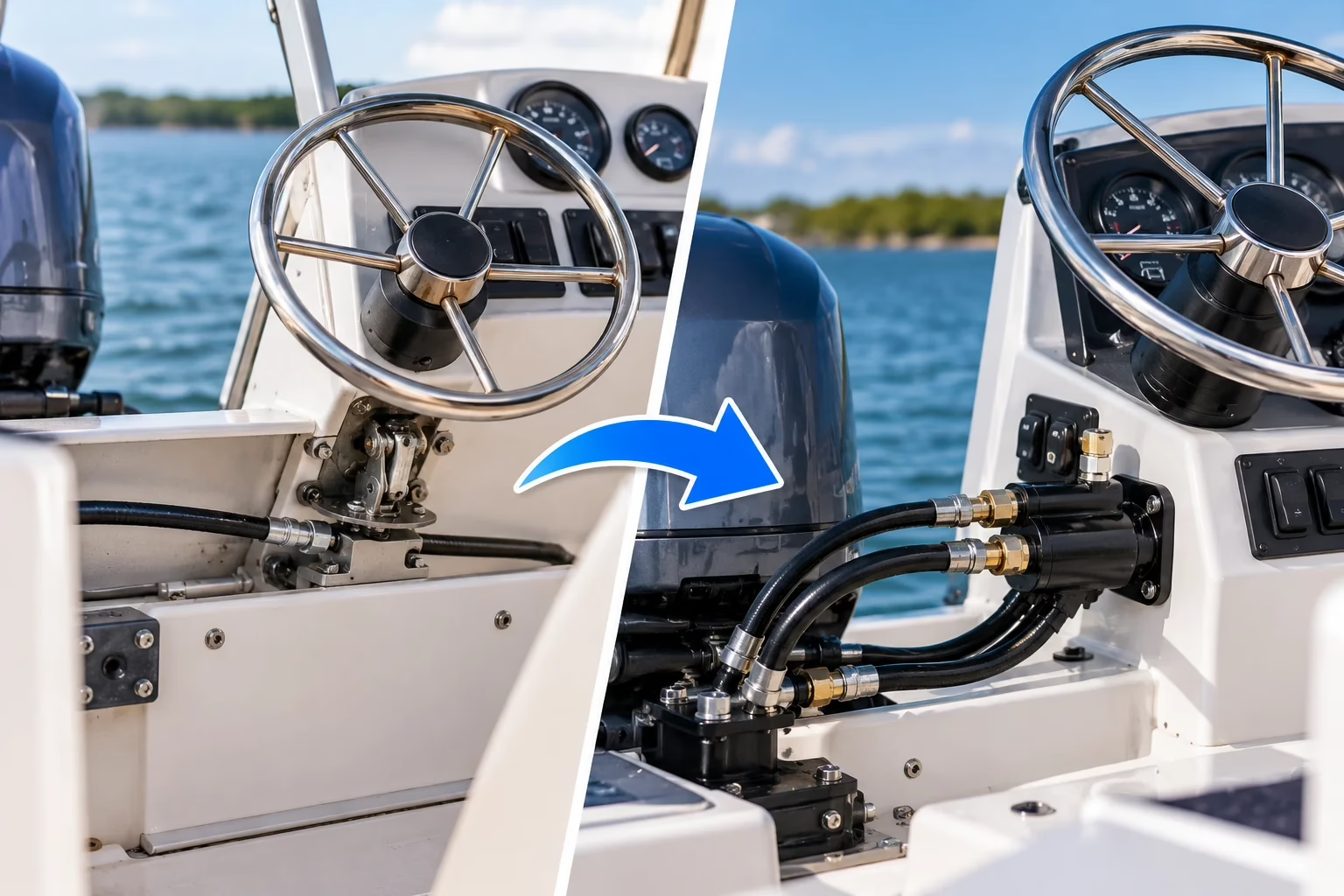
Converting to hydraulic steering replaces cable-and-pulley effort with fluid power, giving lighter, smoother control. The job involves a helm pump, cylinder, hoses, and fluid, and it improves boats with larger outboards. Plan parts by boat size and horsepower, install carefully, and bleed the system fully.
If your wheel feels heavy at speed or your cable has seen better days, it may be time to upgrade. Many boaters convert to boat power steering for easier control, and SeaStar-style systems are popular for good reason. This guide walks you through the process, parts, and decisions. It reflects questions our team at Marine Trading Post answers daily at our Fort Myers, Port Charlotte, and Naples stores.
Mechanical cable systems work well on smaller boats, but they become stiff on bigger or higher-horsepower outboards. Hydraulic systems use fluid to transmit force, giving a lighter, more precise feel. Read our comparisons of hydraulic vs. mechanical steering and the upgrade cost guide.
Feature | Mechanical Cable | Hydraulic |
Steering effort | Heavier at speed | Light and smooth |
Best for | Small boats, low horsepower | Larger outboards, twin engines |
Maintenance | Cable wear, lubrication | Fluid and seals |
Installation | Simpler | More components |
The boat hydraulic steering pump mounts behind the wheel and creates the pressure. Shop a marine hydraulic steering pump matched to your boat length and horsepower.
The cylinder moves the engine, and hoses connect it to the helm. Use hoses rated for hydraulic steering and size lengths carefully.
Choose a compatible boat steering wheel with the right hub and taper for your helm.
Larger boats may benefit from marine power steering using a power steering pump, known as a power assist pump. Read about why SeaStar hydraulic steering is a game changer and whether to upgrade your steering pump.
Expert Insight
Our team finds the most common conversion mistake is choosing a system based on price rather than horsepower and boat length. Match the helm pump and cylinder rating to your setup, and ask us if you’re unsure.
Before ordering, measure your boat’s length, note your outboard’s horsepower, and decide whether you run a single or twin engine setup. Those three details drive nearly every parts decision in a steering conversion.
Use only fluid specified for your system. Automotive fluids, including Honda power steering fluid, are not a substitute for marine hydraulic steering fluid in SeaStar systems. See the difference between marine and automotive power steering for details. If your outboard is a Honda, our guide to Honda outboard steering problems helps.
Bleeding is critical. Follow our SeaStar bleeding guide for the full process.
Item | Typical Consideration |
Parts kit | Depends on boat length and horsepower |
Installation | DIY over a weekend or professional install |
Fluid and accessories | Smaller extra cost |
Handy boaters can complete a conversion with basic tools and a manual. If you’re uncomfortable with hose routing or bleeding, a professional install avoids costly mistakes. Either way, buy quality parts that match your setup.
Marine Trading Post has served boaters since 1985, offering steering systems, parts, and expert advice at competitive prices. Browse our SeaStar hydraulic steering or use the request-a-part form for specific items.
Taking time to test the system at the dock, turning the wheel lock to lock and watching the engine respond smoothly, catches most issues before you leave the slip. If anything feels notchy or slow to return, bleed again before heading out.
Converting to hydraulic steering transforms how your boat feels, especially with a larger outboard. Choose a properly sized helm pump and cylinder, use the right fluid, bleed carefully, and maintain the system. Marine Trading Post is here to help every step, from choosing parts to finishing the install. Visit us in Fort Myers, Port Charlotte, or Naples.
Yes, with basic tools and care. Hose routing and bleeding need attention, so consider a professional if unsure.
A helm pump, cylinder, hoses, fittings, fluid, and a compatible steering wheel.
Often not essential, but it adds smoothness. Larger outboards benefit most.
No. Use fluid specified for your marine steering system.
Larger or higher-horsepower boats may benefit. Check manufacturer guidance.
Fill the reservoir, cycle the wheel slowly, and repeat until no air bubbles appear.
we are here for you! How can we help?