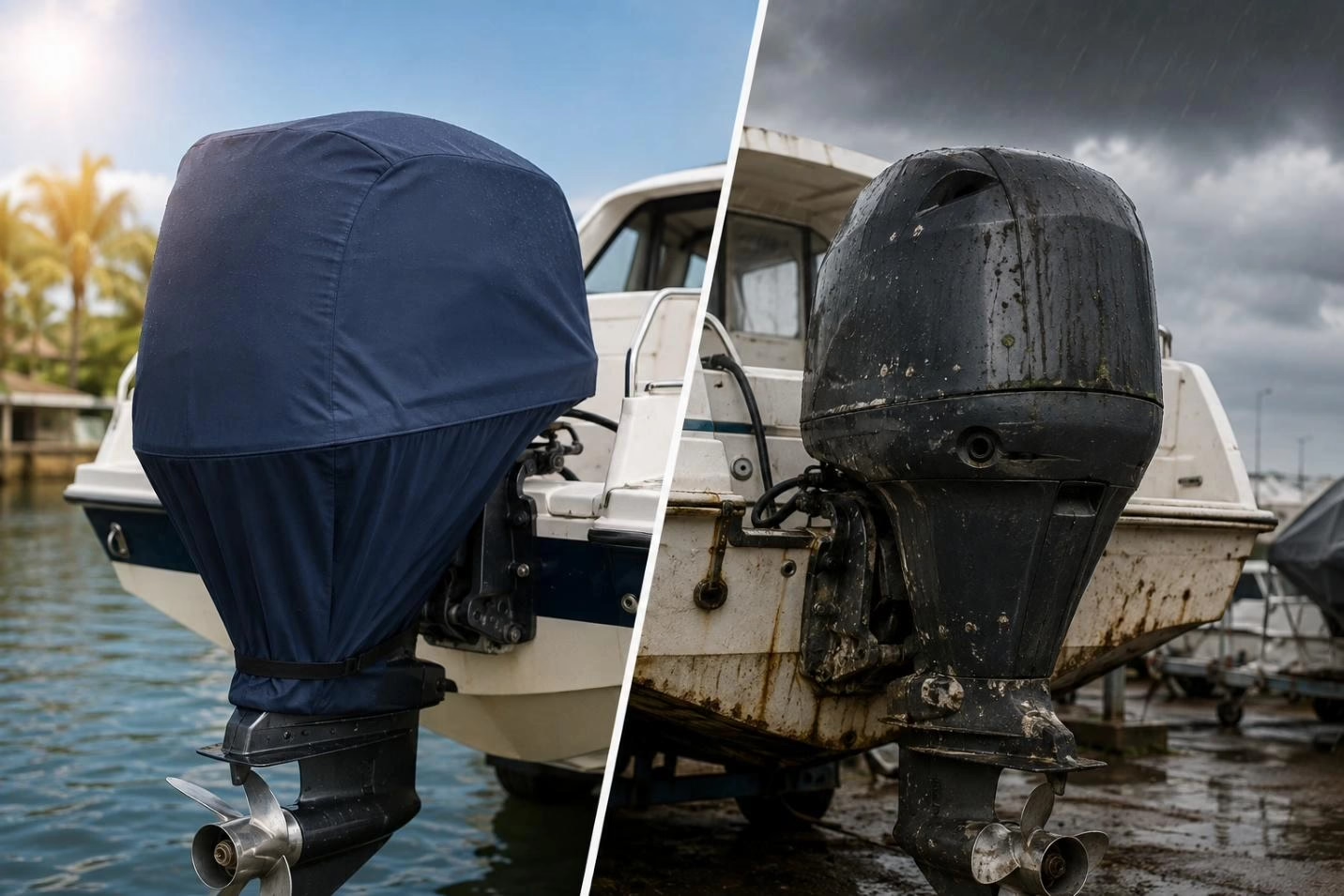
The Hidden Risks of Leaving Your Outboard Motor Uncovered
Your outboard motor is one of the most significant investments on your boat, yet many boaters overlook one of the simplest ways to protect it. Leaving your engine exposed to the elements between trips — without the right outboard motor accessories in place — can lead to accelerated corrosion, electrical failures, and costly repairs. At Marine Trading Post, we have seen what happens when motors go unprotected, and the damage is almost always preventable.
Florida’s coastal environment is particularly harsh on marine equipment. Salt air, UV radiation, tropical rainfall, and humidity create a relentless combination of stressors that degrade unprotected motors surprisingly quickly. Unlike a car engine housed under a hood, an outboard motor is exposed on the transom — directly in the path of whatever the environment throws at it.
The consequences of neglect range from cosmetic fading to serious mechanical failures. Understanding these risks is the first step toward protecting your investment effectively.
Salt air is the most persistent enemy of marine hardware in Southwest Florida. Even when a boat is stored out of the water, salt particles suspended in the air settle on exposed metal surfaces. Without a protective cover, electrical connectors, carburetor components, and metal fasteners on the motor are continuously exposed.
Florida averages over 260 sunny days per year. That abundant sunshine is wonderful for boating — and punishing for exposed equipment. Ultraviolet radiation degrades plastic components, dries out rubber seals, and weakens wire insulation over time.
Cracked wire insulation is particularly dangerous because it creates conditions for short circuits and electrical fires. Outboard motor covers rated for UV resistance shield these components from direct sun exposure and significantly extend their service life.
Rain, morning dew, and even condensation can work their way into unsealed electrical connections on an uncovered motor. Water in electrical systems causes corrosion at terminal points, which in turn causes intermittent failures — the most frustrating kind to diagnose.
Starters, rectifiers, and ignition modules are all susceptible. When water reaches these components repeatedly, failure is not a matter of if but when. A well-fitted cover that channels water away from sensitive areas prevents the vast majority of water-related electrical damage.
Uncovered outboard motors are attractive nesting sites for insects, spiders, and small birds. Nests built inside the cowling block cooling air pathways and introduce organic debris into the engine environment. Insects nesting in fuel systems or vent tubes can cause immediate operational problems.
Beyond animals, wind-carried debris — leaves, sand, and fine particles — accumulates inside an unprotected motor and acts as an abrasive on moving parts over time.
Your outboard motor mounting bracket — the hardware connecting the motor to the transom — is also affected by prolonged exposure. Corrosion at the bracket can compromise the structural integrity of the motor mount, creating a safety risk. Some boaters also use an outboard motor jack plate to optimize motor height and trim, and this additional hardware deserves the same protective attention.
Regularly inspecting and covering mounting hardware, along with the motor itself, is essential for long-term safety and performance.
Brand-specific outboard motor covers — such as Yamaha outboard motor covers or Mercury outboard motor covers — are designed to fit the exact contours of their respective engines. This precision fit provides better protection than a universal cover and ensures that ventilation points remain unobstructed. If you own a Yamaha, Mercury, or Suzuki outboard, a manufacturer-specific cover is generally the better choice.
Universal covers offer more flexibility if you own multiple motors or need a cover for occasional use. However, a poorly fitted universal cover can collect water in low spots and actually trap moisture against the motor rather than repelling it.
If your boat is stored outdoors year-round — as many Florida boats are — a heavy-duty cover is worth the investment. Indoor or garage-stored boats may benefit from a lighter, breathable cover that protects against dust and condensation without trapping heat.
Since 1985, Marine Trading Post has been helping boaters across Fort Myers, Port Charlotte, and Naples protect their investments. Our family-owned business understands that keeping boating affordable means protecting the equipment you already have — not just selling new parts when something fails prematurely.
Our team can help you select the right cover for your specific motor brand and model, along with the complementary accessories that form a complete protection strategy. We carry covers and accessories for all major outboard brands, including Yamaha, Mercury, Suzuki, and more.
Protecting your outboard motor is not complicated, but it does require consistency. The risks of leaving your engine uncovered — corrosion, UV damage, water intrusion, debris, and bracket deterioration — add up over time and can turn what should be a minor maintenance task into a major repair bill. Investing in quality outboard motor covers and the right complementary accessories is one of the most straightforward ways to extend engine life and keep your boating costs manageable. Marine Trading Post has been helping Southwest Florida boaters do exactly that for nearly 40 years. Stop into any of our three locations to find the protection products your motor deserves.